


How Turkish Companies Can Expand Their Business to Germany
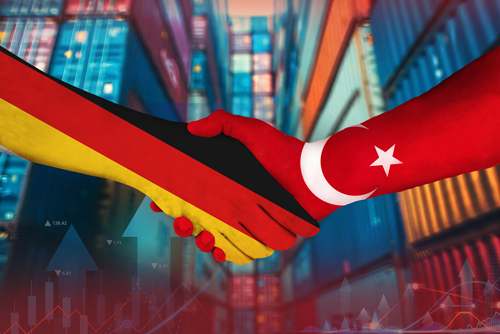
Turkish companies rarely enter Germany simply because it is a large market. In most cases, the decision is triggered by something more specific: an existing German customer requests local support, a distributor wants faster delivery, an OEM asks for EU-based invoicing, or the company wants a permanent base for wider European expansion.
That distinction matters. A Turkish manufacturer with three German customers does not need the same market-entry model as a software company seeking its first European contract. Likewise, a food producer, automotive supplier and construction company will face different compliance, logistics and sales requirements.
This guide therefore focuses on the practical question: What should a Turkish company do next when Germany starts becoming a serious market rather than an occasional export destination?
Why Germany Is Already a Natural Market for Turkish Companies
Germany and Türkiye already have deep commercial links According to data compiled by Germany’s Federal Statistical Office, Türkiye exported goods worth approximately USD 20.43 billion to Germany in 2024 and imported goods worth approximately USD 27.08 billion from Germany. This corresponds to around USD 47.5 billion in bilateral goods trade.The product mix is also relevant. Motor vehicles, machinery, and electrical equipment are among the leading categories in EU–Türkiye trade, which creates natural opportunities for Turkish automotive suppliers, machinery manufacturers, electronics companies, and industrial technology providers.
Türkiye’s customs union with the EU can also simplify trade for many industrial products. Many industrial goods covered by the EU–Türkiye Customs Union can circulate without customs duties or quantitative restrictions, provided that the applicable customs conditions and proof-of-status requirements are met. The arrangement does not remove EU product-safety, conformity, labelling or documentation obligations. Agricultural products and coal and steel products are governed by separate arrangements.
For Turkish companies, the opportunity is therefore not to discover Germany from zero. It is often to convert existing trade activity into a more structured local presence.
The First Decision: Do You Actually Need a German Company?
Opening a GmbH is not always the first or best step. Before registering a company, management should identify the business problem the German entity is expected to solve.
Continue exporting directly when:
- German sales are still occasional
- Orders can be handled efficiently from Türkiye
- Customers accept Turkish invoices
- Local warehousing and after-sales support are not yet required
- The business is still testing demand
Use a distributor or commercial agent when:
- Local relationships are essential
- The company needs market access without building a full team
- Products require frequent customer contact
- Sales volumes do not yet justify a subsidiary
- A trusted sector-specific distributor is available
Consider a branch office when:
- The Turkish parent company wants a direct German presence
- Existing customers require local representation
- The parent company is comfortable carrying the branch’s liabilities
- The business wants to begin operations without creating a fully separate subsidiary
Consider a GmbH when:
- Germany is becoming a long-term strategic market
- Customers require German contracts or invoices
- The company plans to hire employees locally
- Liability separation is important
- The business needs a warehouse, office or production facility
- Germany will serve as a European headquarters
Foreign companies are generally permitted to conduct business in Germany through appropriate legal forms. The right structure depends on the company’s planned activity, liability strategy, tax position and operational needs.
A Simple Entry-Model Decision Table
| Your immediate goal | Practical entry option |
|---|---|
| Test German demand | Direct export or sales representative |
| Find first customers | Distributor, agent or B2B matchmaking |
| Support existing German clients | Branch office or small local team |
| Build a long-term EU operation | German GmbH |
| Protect the Turkish parent company | Separate German subsidiary |
| Store and distribute products locally | GmbH or branch with warehouse |
| Enter through technology collaboration | Strategic partnership or joint project |
This decision should be made before spending money on incorporation.
High-Potential Opportunities for Turkish Companies
Turkish companies may find opportunities in sectors where they already have strong manufacturing, export, or technology capabilities.
Automotive and Industrial Manufacturing
Germany’s large industrial base creates opportunities for Turkish suppliers of automotive components, machinery, plastics, metals and production equipment.
Companies entering these sectors should demonstrate strong quality control, reliable delivery and compliance with the applicable EU and German technical and product-safety requirements. Relevant DIN, EN or ISO standards may also be commercially expected or used to demonstrate conformity.
Textiles and Consumer Products
Turkish textile and apparel businesses can target German retailers, wholesalers and specialized buyers. However, success depends on more than competitive pricing.
German buyers often consider sustainability, product quality, supply-chain transparency and delivery reliability.
Food and Beverage
Germany’s large and diverse consumer market offers opportunities for Turkish food producers. Businesses must comply with EU requirements for labelling, packaging, product safety and traceability.
Technology and Digital Services
Turkish software, cybersecurity, automation and IT companies can serve German businesses through partnerships, direct sales or a local office.
Logistics and Renewable Energy
Germany’s central location supports logistics and distribution opportunities. Renewable energy, energy efficiency and environmental technologies are also important areas for international cooperation.
Choosing the Right German Location
The best-known city is not automatically the best location.
| German location | Strong fit for |
|---|---|
| Hannover | Industrial technology, automation, logistics and trade-fair-led market entry |
| Stuttgart region | Automotive, engineering and industrial suppliers |
| Hamburg | Logistics, maritime, aviation and trade |
| Düsseldorf/NRW | International trade, business services, retail and access to a substantial Turkish business community |
| Frankfurt region | Finance, professional services, logistics and headquarters |
| Berlin | Start-ups, software, creative industries and digital business |
| Munich | High technology, automotive, electronics and advanced engineering |
The location decision should be based on customers, suppliers, talent, logistics and operating requirements not prestige alone.
Why Hannover Can Be a Practical Entry Point
Hannover is particularly relevant for Turkish industrial and technology companies because it combines manufacturing networks, central logistics and major international exhibitions.
HANNOVER MESSE 2025 attracted approximately 123,000 visitors from 150 countries and around 4,000 exhibiting companies. More than 40% of visitors came from outside Germany.
This creates an opportunity to test demand before making a major investment.
A Turkish company can use Hannover to:
- Meet potential customers and suppliers
- Compare competing technologies
- Identify distributors
- Arrange pre-qualified B2B meetings
- Observe German buyer expectations
- Validate pricing and positioning
- Build partnerships with industrial companies
The trade fair should not be treated as a branding trip. It should be managed as a structured sales project with target accounts, scheduled meetings, follow-up responsibilities and measurable outcomes.
Seven Mistakes Turkish Companies Commonly Make
1. Registering a company before validating demand
A legal entity does not create customers. Market validation should come first.
2. Selecting a city based only on reputation
Munich or Berlin may be attractive, but another region may provide better customer access and lower operating costs.
3. Using a direct Turkish-to-German translation
German buyers expect clear technical and commercial language. Marketing material should be localized, not merely translated.
4. Competing only on price
German customers may pay more for reliability, documentation, engineering support and reduced supply-chain risk.
5. Underestimating the sales cycle
Industrial purchasing decisions may involve technical review, compliance checks, supplier qualification and multiple stakeholders.
6. Treating compliance as a final step
Certification and product requirements should be assessed before approaching customers.
7. Attending trade fairs without a meeting strategy
Walking through an exhibition rarely produces sustainable business. Companies should identify target companies and schedule meetings in advance.
Conclusion
Germany offers significant opportunities for Turkish companies, but success depends on choosing the right sequence.
The strongest approach is usually:
- Validate German customer demand.
- Confirm compliance requirements.
- Select the right entry model.
- Build local relationships.
- Register a company only when there is a clear operational reason.
- Track commercial performance after launch.
For Turkish manufacturers, technology providers, food businesses and service companies, Germany can become much more than an export market. With the right strategy, it can serve as a trusted base for long-term European growth.
Planning Your Expansion from Türkiye to Germany?
Contact HIBS Germany for tailored support with market validation, partner identification, company formation, location selection and business development in Hannover and across Germany.
Can a Turkish company sell in Germany without opening a company?
When should a Turkish company establish a GmbH?
Does the EU–Türkiye Customs Union remove all import requirements?
Which German city is best for a Turkish company?
How can HIBS Germany reduce market-entry risk?
 Twitter